
Nursing Tips for Managing Hand-Foot Syndrome During Chemotherapy
Written by Mark Brown, RN
Introduction
Chemotherapy saves lives, but it often comes with difficult side effects that can affect daily comfort and quality of life. One of the most common and disruptive is Hand-Foot Syndrome (HFS), also called palmar-plantar erythrodysesthesia.
HFS causes redness, tingling, swelling, pain, and peeling on the palms of your hands and the soles of your feet. For some, it feels like a burning sensation; for others, it’s painful enough to make walking, cooking, or even buttoning a shirt difficult.
As a nurse who has worked with many oncology patients, I know how discouraging this can feel. The good news is that there are simple, proactive steps you can take to ease discomfort, protect your skin, and help you continue your treatment plan with fewer interruptions.
This guide shares nursing tips and patient experiences for managing HFS. We’ll talk about what causes it, how to prevent it, why moisturizing early matters, and how Dermavitality’s Hand-Foot Cream can help soothe and heal skin during chemotherapy.
What is Hand-Foot Syndrome?
Hand-Foot Syndrome happens when chemotherapy drugs leak into the small blood vessels in your hands and feet. Because these areas take constant pressure and friction, they’re especially vulnerable to irritation.
Common Symptoms

Tingling, burning, or numbness

Redness and swelling

Tenderness or pain when walking or using your hands

Cracks, peeling, or blisters in severe cases
Symptoms usually begin 2–6 weeks after treatment starts and may worsen with repeated cycles (Memorial Sloan Kettering Cancer Center).
Drugs Most Commonly Linked to HFS
- Capecitabine (Xeloda)
- 5-Fluorouracil (5-FU)
- Docetaxel (Taxotere)
- Cytarabine
- Liposomal Doxorubicin (Doxil, Caelyx)
Symptom Severity


Why Moisturizing Early Matters
One of the most effective strategies I’ve seen in practice is starting moisturization on day one of chemotherapy — before symptoms even begin.
Chemotherapy weakens your skin barrier, the outer layer that normally protects against water loss and irritants. When that barrier is compromised, your skin dries, cracks, and becomes vulnerable to inflammation and pain.
Moisturizing early helps by:
- Strengthening the skin barrier — making it more resilient before damage sets in.
- Preventing cracks — so infection and pain are less likely.
- Reducing redness and irritation — by calming inflammation before it spreads.
- Improving comfort — hydrated skin feels softer, less tight, and less tender.
Studies and patient education guides consistently emphasize that daily, proactive skin care lowers the risk of severe HFS (Oral Chemotherapy Education Sheets).
How to Prevent and Manage Hand-Foot Syndrome
There’s no single “cure” for HFS, but combining self-care with the right skin routine can make a huge difference.
1. Cool It Down
- Soak hands and feet in cool (not ice-cold) water for 15–20 minutes.
- Avoid hot baths, saunas, or hot tubs.
- Use lukewarm water for showers and handwashing.
- Wear cotton-lined gloves when cleaning to avoid heat and friction.
2. Reduce Friction and Pressure
- Choose cushioned shoes with shock-absorbing soles.
- Wear soft cotton socks and avoid tight footwear.
- Use gel inserts or pads to relieve pressure points.
- Avoid barefoot walking on hard surfaces.
- Limit activities like jogging, tennis, or heavy lifting until symptoms improve (MD Anderson Cancer Center).
3. Support Healthy Skin
- Keep nails short and smooth.
- Avoid harsh soaps, detergents, or abrasive scrubs.
- Elevate feet when resting to reduce swelling.
- Stay hydrated and eat nutrient-rich foods that support skin repair.
The Best Cream for Hand-Foot Syndrome Relief
Not all moisturizers are equal. For HFS, you want a cream that is fragrance-free, alcohol-free, rich in emollients, and formulated with calming botanicals.
Why I Use Dermavitality’s Hand-Foot Cream
Dermavitality’s Hand-Foot Cream was nurse-formulated specifically for oncology patients. It combines hydrating emollients with natural plant extracts known to soothe and restore skin.
Ingredient Spotlight:
- Organic Aloe Vera & Glycerin → Deliver cooling hydration, relieving dryness and tightness.
- Shea Butter & Safflower Seed Oil → Seal in moisture, rebuild skin barrier, and prevent water loss.
- Calendula & Roman Chamomile → Calm redness, reduce inflammation, and soothe tenderness.
- Vitamin E & Oat Oil → Provide antioxidant support and promote skin repair.
- Comfrey Root & Cucumber Extracts → Offer a cooling effect and help heal cracks.
- Bergamot & Lemon Oils → Add a light, refreshing finish without harsh chemicals.
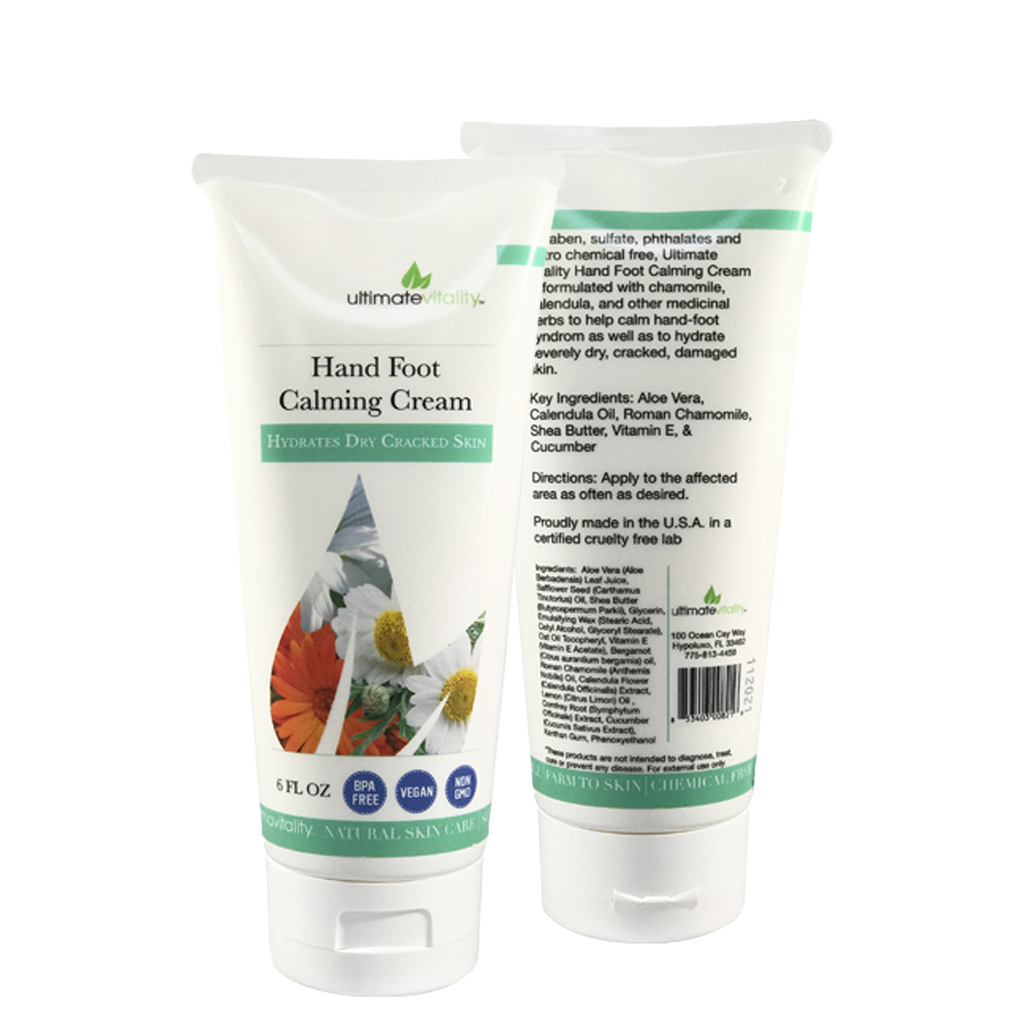
When I apply it twice a day — especially after washing and before bed — my skin feels softer, calmer, and more comfortable. Wearing cotton socks or gloves overnight after applying makes it even more effective.
Explore Dermavitality’s full line of Oncology Skincare Products for chemotherapy, radiation, and everyday relief.
When to Call Your Care Team
Even with great self-care, sometimes symptoms progress. Contact your oncology team if you notice:
- Pain that interferes with daily life
- Blisters, open sores, or peeling
- Signs of infection (warmth, pus, or fever)
Your doctor may recommend:
- Mild steroid creams to reduce inflammation
- Lidocaine-based pain creams or patches
- Oral pain medicine if walking or gripping becomes difficult

FAQ: Hand-Foot Syndrome and Chemotherapy
- What is the best cream for Hand-Foot Syndrome?
The best creams are fragrance-free, alcohol-free, and rich in emollients and soothing botanicals. Dermavitality’s Hand-Foot Cream is designed specifically for oncology patients and combines aloe, shea butter, calendula, and vitamin E for targeted relief. - Does Hand-Foot Syndrome go away after chemotherapy?
Yes, symptoms usually improve once chemotherapy is reduced, paused, or completed. However, good skin care during treatment helps prevent long-term damage. - Can I exercise if I have HFS?
Light activity like walking is often fine, but high-impact or repetitive friction activities (running, tennis, heavy lifting) can worsen symptoms. Always check with your doctor. - Are natural remedies safe for HFS?
Some natural ingredients like calendula, chamomile, and aloe are soothing, but avoid essential oils or harsh herbal products not tested for oncology skin. Always consult your care team before trying new remedies. - What foods or supplements help with HFS?
Staying hydrated and eating foods rich in vitamins A, C, and E can support skin repair. Some studies suggest omega-3 fatty acids may reduce inflammation, but evidence is limited. Supplements should only be taken if approved by your oncology team.
Taking Charge of Your Care
Living with Hand-Foot Syndrome can feel overwhelming, but small daily steps make a big difference:
- Track your symptoms in a journal.
- Share changes with your care team early.
- Stick to your moisturizing routine.
- Remind yourself that prevention helps you stay on treatment with fewer disruptions.
Key Takeaways
- Hand-Foot Syndrome is a common side effect of chemotherapy that can cause pain, redness, and cracking on hands and feet.
- Cooling, reducing friction, and moisturizing early are the most effective ways to prevent and manage symptoms.
- Dermavitality’s Hand-Foot Cream is nurse-formulated with natural botanicals to calm, soothe, and heal fragile skin.
- Contact your care team if symptoms worsen — there are medical treatments that can help.
Conclusion
Hand-Foot Syndrome doesn’t have to take over your life during chemotherapy. With proactive care, gentle daily routines, and oncology-safe skincare, you can stay more comfortable and continue your treatment with confidence.
For me, Dermavitality’s Hand-Foot Cream has been a daily source of relief and healing. When my skin feels better, it’s easier to focus on what really matters: recovery and well-being.
Visit the Wellness Blog for more tips on skincare during chemotherapy and radiation.
Disclaimer: This blog shares personal tips and experiences. It is not a substitute for medical advice. Always talk with your doctor or oncology team before starting or changing any part of your care routine.
Written by Mark Brown, RN
References
- Memorial Sloan Kettering Cancer Center. Hand-Foot Syndrome (Skin Reaction)
- MD Anderson Cancer Center. Chemotherapy Side Effect: Hand-Foot Syndrome
- Oral Chemotherapy Education. Hand-Foot Reaction Supplemental Education Sheet
- National Library of Medicine. Management of Hand-Foot Syndrome in Oncology Patients