
Supervivencia al cáncer: Curación, propósito y cómo vivir con incertidumbre después del tratamiento

Durante meses, a veces años, el tratamiento contra el cáncer se convierte en el centro de la vida diaria.
Citas. Efectos secundarios. Escaneos. Supervivencia. Luego termina el tratamiento. Y muchas personas se quedan con una pregunta tranquila e inesperada:
“¿Ahora qué?”
Esto es la supervivencia: la fase de atención del cáncer que comienza cuando termina el tratamiento y continúa de por vida. La supervivencia no es simplemente seguir adelante. Es aprender a vivir, sanar y encontrar significado después del cáncer.
En Dermavitality, creemos que la supervivencia merece tanta atención, educación y compasión como el tratamiento en sí.
¿Qué es la supervivencia al cáncer?

La supervivencia al cáncer comienza el día en que termina el tratamiento activo, e incluye mucho más que citas de seguimiento.
La supervivencia a menudo implica:
- Curación física continua después de la quimioterapia o la radiación
- Procesamiento emocional de la experiencia del cáncer
- Ansiedad por las exploraciones, los síntomas o la recurrencia
- Reconstrucción de rutinas, confianza e identidad
Muchos supervivientes se sorprenden al descubrir que esta fase puede sentirse más difícil que el tratamiento. Durante el tratamiento, hay un plan. Durante la supervivencia, hay espacio, y ese espacio puede sentirse abrumador.
Reconstruyendo la confianza en el cuerpo después del cáncer

El cáncer y sus tratamientos pueden dejar a los supervivientes sintiéndose desconectados de sus cuerpos.
La supervivencia es un momento para:
- Practicar un autocuidado suave sin presión
- Apoyar la piel, los nervios y los tejidos que aún se están curando
- Escuchar al cuerpo sin miedo ni juicio
- Crear rutinas que se sientan reconfortantes y seguras
Pequeños y constantes actos de cuidado (movimiento, descanso, cuidado de la piel, conexión) ayudan a reconstruir la confianza con el tiempo. La curación no es lineal.
Recursos y apoyo basados en evidencia para la supervivencia
La supervivencia no significa navegar la vida después del cáncer solo. Las siguientes organizaciones confiables y basadas en evidencia brindan educación, apoyo emocional y comunidad para sobrevivientes y cuidadores.
-
Sociedad Americana del Cáncer
Guía completa para la supervivencia, incluyendo salud emocional, miedo a la recurrencia y vida después del tratamiento.
Visitar los recursos para la supervivencia de la Sociedad Americana del Cáncer -
Instituto Nacional del Cáncer
Información basada en investigación sobre supervivencia, efectos tardíos, atención de seguimiento y bienestar emocional.
Visitar los recursos para la supervivencia del Instituto Nacional del Cáncer -
Comunidad de Apoyo al Cáncer
Grupos de apoyo gratuitos, asesoramiento y programas de supervivencia, en persona y en línea.
Visitar la Comunidad de Apoyo al Cáncer -
Fundación Livestrong
Centrada en la vida después del cáncer, ofrece servicios de navegación y programas de supervivencia basados en la comunidad.
Visitar la Fundación Livestrong -
Imerman Angels
Apoyo entre pares uno a uno que conecta a sobrevivientes y cuidadores con mentores que realmente comprenden.
Visitar Imerman Angels -
CancerCare
Asesoramiento gratuito, grupos de apoyo y talleres educativos dirigidos por trabajadores sociales oncológicos.
Visitar CancerCare
Vivir plenamente mientras se vive con incertidumbre

La supervivencia no significa que el miedo desaparezca. Significa aprender a vivir junto a él.
Muchos supervivientes descubren que:
- El miedo se vuelve más manejable con el tiempo
- El propósito puede coexistir con la ansiedad
- Ayudar a los demás trae una paz inesperada
- La curación continúa mucho después de que termina el tratamiento
La supervivencia no se trata de fingir que el cáncer no sucedió. Se trata de integrar la experiencia con compasión.
El compromiso de Dermavitality con la supervivencia
Dermavitality fue creada para apoyar a las personas a través del cáncer y más allá.
Guiada por la experiencia en enfermería oncológica, nuestra misión es apoyar la comodidad, la confianza y el cuidado durante el tratamiento, la recuperación y la supervivencia.
No estás atrasado. No estás fallando. Estás sanando.
Preguntas frecuentes
¿Es normal sentir ansiedad después de que termina el tratamiento contra el cáncer? >
Sí. El miedo a la recurrencia y la ansiedad son muy comunes en la supervivencia y no significan que algo ande mal.
¿Por qué la supervivencia a veces se siente más difícil que el tratamiento? >
Durante el tratamiento hay estructura y monitoreo constante. La supervivencia trae incertidumbre y procesamiento emocional.
¿Ayudar a otros realmente puede ayudar a los supervivientes a sanar? >
Muchos supervivientes descubren que el apoyo entre pares y ayudar a otros restaura el propósito, reduce el aislamiento y apoya la curación emocional.
Acerca del autor

Mark Brown, RN
Enfermero Oncológico | Fundador, Dermavitality
Mark Brown, RN, es un enfermero oncológico con años de experiencia apoyando a pacientes durante la quimioterapia y la radiación. Su trabajo se centra en el cuidado suave y de apoyo de la piel para personas que experimentan efectos secundarios relacionados con el tratamiento.
Descargo de responsabilidad
Este contenido tiene únicamente fines informativos y no pretende sustituir el consejo, diagnóstico o tratamiento médico profesional. Consulte siempre a su médico, enfermera de práctica avanzada u otro proveedor de atención médica calificado si tiene alguna pregunta sobre una afección o tratamiento médico.
Leer más
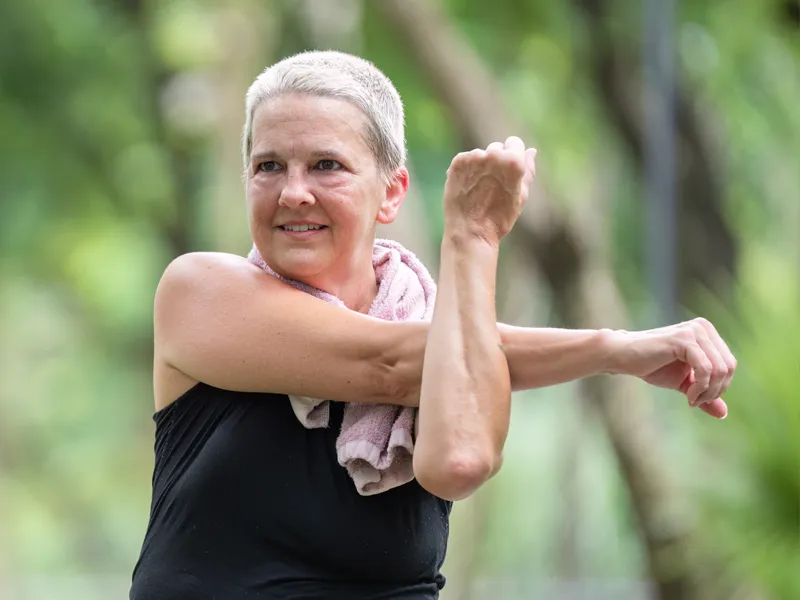

El ejercicio suave durante el tratamiento contra el cáncer puede ayudar a reducir la fatiga, mejorar la fuerza y apoyar el bienestar emocional. Descubra por qué ahora se recomienda el movimiento se...
El ejercicio suave durante el tratamiento contra el cáncer puede ayudar a reducir la fatiga, mejorar la fuerza y apoyar el bienestar emocional. Descubra por qué ahora se recomienda el movimiento se...