
Ejercicio durante el tratamiento contra el cáncer: lo que la ciencia dice sobre la fuerza, la recuperación y la curación
- ¿Se puede hacer ejercicio durante el tratamiento del cáncer?
- Qué dice la investigación sobre el ejercicio y la recuperación del cáncer
- Los mejores tipos de ejercicio durante la quimioterapia y la radiación
- Cómo empezar a hacer ejercicio de forma segura durante el tratamiento del cáncer
- Apoyo al cuerpo más allá del ejercicio
- El ejercicio como empoderamiento durante el proceso del cáncer
- Vea la discusión completa con expertos
- Preguntas frecuentes
- Acerca del autor
El tratamiento del cáncer impone un estrés enorme al cuerpo, física, emocional y mentalmente. Muchos pacientes hacen la misma pregunta:
“¿Es seguro hacer ejercicio durante el tratamiento del cáncer?”
Según la investigación oncológica líder, la respuesta a menudo es sí, y puede ser increíblemente beneficioso cuando se hace correctamente.
En una poderosa discusión de expertos, el investigador de oncología del ejercicio Dr. Kerry Courneya, PhD, explica cómo el movimiento desempeña un papel significativo en la atención, recuperación y supervivencia del cáncer.
¿Se puede hacer ejercicio durante el tratamiento del cáncer?

Durante muchos años, el reposo fue la recomendación por defecto durante la quimioterapia y la radiación. Hoy en día, la ciencia cuenta una historia diferente.
Los beneficios pueden incluir:
- Mejora de la fuerza física y la resistencia
- Reducción de la fatiga relacionada con el tratamiento
- Mejor estado de ánimo y bienestar emocional
- Mayor capacidad para tolerar el tratamiento
- Apoyo para la recuperación a largo plazo
Es importante destacar que el ejercicio durante el tratamiento del cáncer no significa entrenamientos intensos o esforzarse hasta el agotamiento. Significa movimiento intencional y suave, adaptado al individuo.
Qué dice la investigación sobre el ejercicio y la recuperación del cáncer
En el podcast, el Dr. Courneya explica que la actividad física es una de las intervenciones en el estilo de vida más estudiadas en oncología.
Grandes estudios sugieren que el ejercicio regular puede:
- Mejorar la calidad de vida durante el tratamiento
- Ayudar a preservar la masa muscular y la función física
- Apoyar la salud inmunológica y metabólica
- Reducir potencialmente el riesgo de recurrencia de ciertos cánceres, incluidos el cáncer de mama y de colon
Algunas investigaciones estiman que hasta el 40% de los cánceres pueden estar influenciados por factores del estilo de vida, como la actividad física, la nutrición y el tabaquismo.
Si bien el ejercicio no es una cura, cada vez se considera más una terapia de apoyo junto con el tratamiento convencional.
Los mejores tipos de ejercicio durante la quimioterapia y la radiación

No todos los ejercicios son iguales, y durante el tratamiento del cáncer, menos suele ser más.
El Dr. Courneya enfatiza que los programas más efectivos priorizan la consistencia, la seguridad y la personalización.
Las actividades comúnmente recomendadas incluyen:
- Caminar a un ritmo cómodo
- Entrenamiento de fuerza suave con resistencia ligera
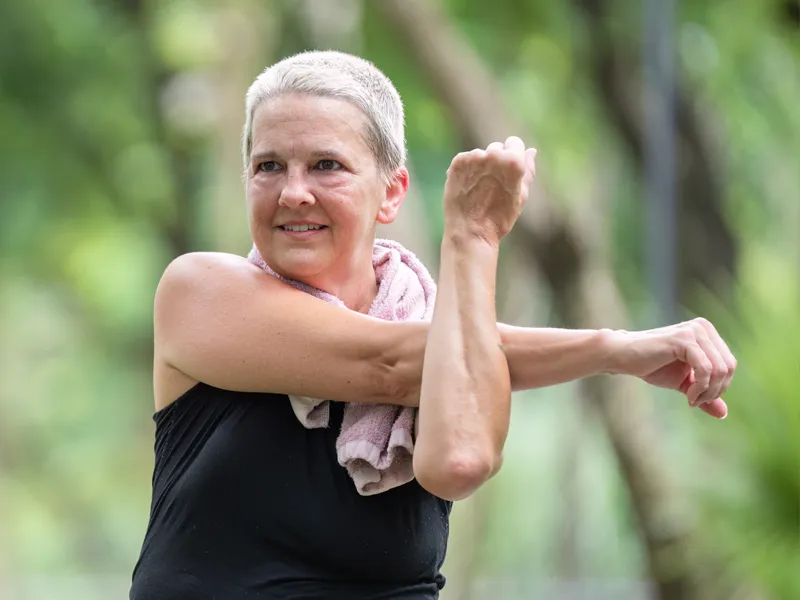
- Ejercicios de estiramiento o movilidad
- Trabajo de equilibrio y postura
- Actividades de bajo impacto como el ciclismo estacionario o el ejercicio acuático
El objetivo no es el rendimiento. El objetivo es mantener la función, la circulación y la confianza en el cuerpo.
Cómo empezar a hacer ejercicio de forma segura durante el tratamiento del cáncer

Antes de comenzar cualquier rutina de ejercicios, los pacientes siempre deben:
- Hablar con su equipo de oncología
- Escuchar atentamente sus niveles de energía diarios
- Detenerse si se produce dolor, mareos o síntomas inusuales
Los puntos de partida pueden ser tan simples como:
- 5-10 minutos de caminata
- Estiramientos suaves una vez al día
- Movimientos ligeros en los "días buenos", descanso en los días más difíciles
El progreso debe ser gradual y flexible. Tu cuerpo ya está haciendo un gran esfuerzo.
Apoyo al cuerpo más allá del ejercicio

El movimiento es una parte del apoyo al cuerpo durante el tratamiento del cáncer. La piel, los nervios y el tejido conectivo también están bajo estrés, especialmente durante la quimioterapia y la radiación.
Muchos pacientes experimentan:
- Irritación cutánea relacionada con la radiación
- Sequedad o sensibilidad relacionadas con la quimioterapia
- Malestar en manos y pies
- Cambios en el cuero cabelludo y el cabello
En Dermavitality, la educación y el desarrollo de productos se guían por la experiencia en enfermería oncológica y las necesidades reales de los pacientes. Nuestro objetivo es ayudar a los pacientes a sentirse apoyados, no abrumados, durante el tratamiento y la recuperación.
El ejercicio como empoderamiento durante el proceso del cáncer

El cáncer puede hacer que las personas se sientan desconectadas de sus cuerpos. El movimiento suave e intencional ayuda a muchos pacientes a reconstruir la confianza en su fuerza, incluso durante el tratamiento.
Como explica el Dr. Courneya, el ejercicio no se trata de control, sino de participación en la curación.
Combinado con atención médica compasiva, cuidado de la piel de apoyo, nutrición y descanso, el movimiento se convierte en otra forma de cuidarse durante una etapa desafiante.
Vea la discusión completa con expertos
Para obtener más información sobre la ciencia detrás del ejercicio y el cáncer, vea la conversación completa con el Dr. Kerry Courneya:
Preguntas frecuentes
¿Es seguro hacer ejercicio durante el tratamiento del cáncer?
Para muchas personas, el ejercicio suave durante el tratamiento del cáncer es seguro y beneficioso cuando lo aprueba su equipo de atención médica. Las investigaciones sugieren que actividades ligeras como caminar, estirarse o ejercicios de fuerza de bajo impacto pueden ayudar a reducir la fatiga, apoyar la función física y mejorar el bienestar general durante el tratamiento.
¿Qué tipos de ejercicio son mejores durante la quimioterapia o la radioterapia?
Durante la quimioterapia o la radioterapia, a menudo se recomiendan formas de ejercicio de bajo impacto y flexibles. Estas pueden incluir caminar, entrenamiento de fuerza suave, estiramientos, ejercicios de equilibrio o ciclismo ligero. El ejercicio debe adaptarse a los niveles de energía diarios y suspenderse si se producen molestias o síntomas inusuales.
¿Puede el ejercicio ayudar con la recuperación del cáncer después del tratamiento?
Las investigaciones demuestran que la actividad física regular después del tratamiento del cáncer puede ayudar a la recuperación al mejorar la fuerza, la resistencia, el estado de ánimo y la calidad de vida. Muchos supervivientes descubren que el movimiento gradual y constante les ayuda a recuperar la confianza en sus cuerpos durante el proceso de curación.
Acerca del autor

Mark Brown, RN
Enfermero oncológico | Fundador, Dermavitality
Mark Brown, RN, es un enfermero oncológico con años de experiencia apoyando a pacientes durante la quimioterapia y la radiación. Su trabajo se centra en el cuidado suave y de apoyo de la piel para personas que experimentan efectos secundarios relacionados con el tratamiento.
Descargo de responsabilidad
Este contenido tiene fines únicamente informativos y no pretende sustituir el consejo, diagnóstico o tratamiento médico profesional. Consulte siempre a su médico, enfermero de práctica avanzada u otro proveedor de atención médica calificado con cualquier pregunta que pueda tener sobre una afección o tratamiento médico.
Leer más


Cuando el tratamiento del cáncer termina, muchos supervivientes se quedan preguntándose: "¿Y ahora qué?" La supervivencia al cáncer es la fase de curación de por vida después del tratamiento, una q...
Cuando el tratamiento del cáncer termina, muchos supervivientes se quedan preguntándose: "¿Y ahora qué?" La supervivencia al cáncer es la fase de curación de por vida después del tratamiento, una q...