
Why Does Chemo Cause Neuropathy and Dry Skin?
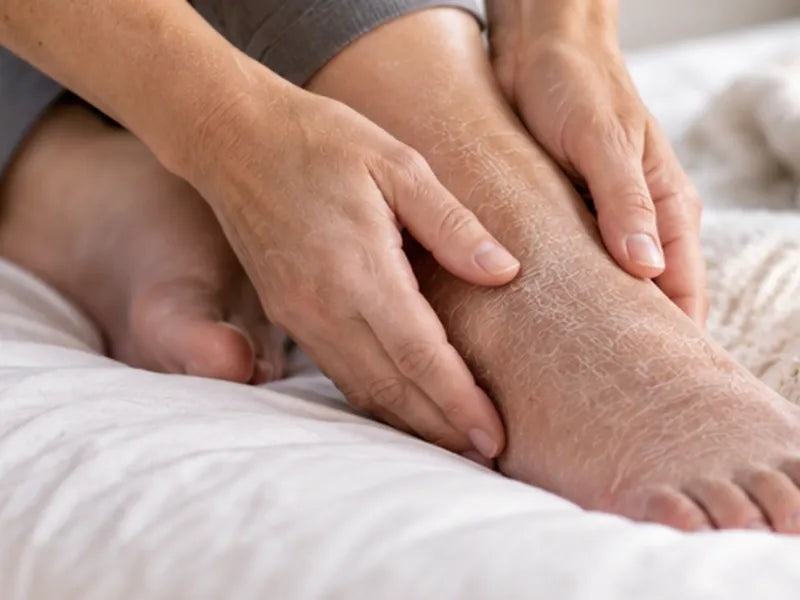
Quick answer: Chemotherapy can affect the nerves in your hands and feet and disrupt the skin barrier, since both nerve fibers and skin cells are sensitive to treatment. That can mean tingling, numbness, and dry, itchy skin. Your care team's plan for nerve symptoms, gentle moisturizing, and fragrance-free products can support comfort along the way.
Table of Contents
- Why Do Neuropathy and Dry Skin Show Up Together During Chemo?
- How Does Chemo Cause Nerve Damage?
- How Does Chemo Affect Your Skin Barrier?
- What Helps With Chemo-Induced Neuropathy?
- What Helps With Chemo-Induced Dry Skin?
- How Do You Build a Skin Care Routine During Chemo?
- Which Approaches Should You Be Careful With?
- What Should You Remember About Chemo Neuropathy and Dry Skin?
- Here's How Dermavitality Can Help
- Frequently Asked Questions
- References
Why Do Neuropathy and Dry Skin Show Up Together During Chemo?
It can feel like your body changed overnight. Your fingertips tingle when you hold a mug. Your feet feel numb on cold floors. And your skin is so dry that it itches, cracks, or peels no matter how much lotion you use. If you are living with both, you are not imagining a connection, and you are not alone.
Chemotherapy drugs are designed to affect rapidly dividing cancer cells, but other cells in the body can be affected too, including nerve cells and skin cells. This guide explains how that happens, what major organizations say about managing it, and which gentle routines can support comfort. For a deeper look at nerve symptoms, see our overview of managing chemotherapy-induced neuropathy.
- How chemotherapy can affect peripheral nerves and skin cells
- What the research says about how common neuropathy is
- What guidelines recommend for nerve symptoms and dry skin
- How to build a gentle daily routine during treatment
- What to avoid and when to call your care team
How Does Chemo Cause Nerve Damage?
Chemotherapy-induced peripheral neuropathy, often called CIPN, develops because some chemotherapy drugs affect the cellular machinery that peripheral nerves rely on. A 2024 review in Frontiers in Molecular Neuroscience estimates that 19% to 85% of patients develop CIPN during chemotherapy, depending on the drug and dose.
How Do Taxanes Affect Nerves?
Taxanes such as paclitaxel work by promoting microtubule assembly, and the same action can cause excessive tubulin polymerization in sensory neurons. Microtubules are the internal tracks nerve cells use to move materials along their fibers. When the tracks are disrupted, the longest nerve endings in the hands and feet are often the first to show symptoms such as tingling and numbness.
How Do Platinum Drugs Affect Nerves?
Platinum agents such as cisplatin and oxaliplatin can bind to mitochondrial DNA in dorsal root ganglion neurons, which are sensory nerve cells just outside the spinal cord. The review describes this damage as impairing the cells' energy supply and, in some cases, leading to cell death. Nerve cells that cannot keep up their energy needs struggle to send normal signals.
Why Can Nerve Symptoms Feel So Intense?
Inflammation appears to play a role. The same review reports that large numbers of macrophages, a type of immune cell, gather in the dorsal root ganglia after chemotherapy, along with higher levels of inflammatory signals such as TNF-alpha. These signals can make pain-sensing nerves more sensitive, which may help explain burning or electric sensations. Our post on hand-foot syndrome related to chemotherapy covers a separate skin reaction that can also affect the hands and feet.
How Long Does Neuropathy Last?
Longer than many people expect. A 2026 meta-analysis of 197 studies estimated that about 44.5% of patients had chronic CIPN, defined as symptoms lasting three months or more after chemotherapy ended. The authors note very high variation between studies and low certainty, so treat the number as a rough picture instead of a prediction. The American Cancer Society says nerve symptoms can last weeks, months, or even years, and may slowly improve, resolve, or stay.
How Does Chemo Affect Your Skin Barrier?
Your outer skin layer works like a wall that holds moisture in and keeps irritants out. Keratinocytes, the cells that build that wall, divide quickly, which makes them sensitive to treatment.
What Happens to Skin Cells During Chemo?
A 2014 study on barrier-focused skin care notes that anthracyclines, taxanes, and alkylating agents can disrupt keratinocyte differentiation and the skin barrier. A weaker barrier lets more water escape, which is called transepidermal water loss. The result is dryness, itching, and irritation, and in some people cracking and peeling.
Why Is Chemo Dry Skin Different From Everyday Dry Skin?
Everyday dryness often responds to a basic lotion. Chemo-related dryness can run deeper, because the barrier itself is affected, and it can continue throughout treatment and for some time afterward. That is why thicker creams and ointments, gentle cleansing, and steady daily habits tend to matter more than any single product. Our nurse-written overview of chemo side effects on skin explains other common skin changes.
What Helps With Chemo-Induced Neuropathy?
Neuropathy needs medical guidance. According to the ASCO guideline, no agents are recommended to prevent CIPN, and duloxetine is the only agent with appropriate evidence for established painful CIPN, though the amount of benefit is limited. The guideline also advises clinicians to consider whether chemotherapy should be delayed, reduced, substituted, or stopped when neuropathy is intolerable or affects function.
Which Options Should You Ask Your Oncology Team About?
Duloxetine is the main medication option for painful CIPN. Your team may also discuss other approaches, including topical patches. Every treatment plan is different, so bring up new tingling, numbness, or pain as soon as it starts, and ask which options are safe alongside your regimen. ASCO also discourages acetyl-L-carnitine for preventing CIPN, so talk to your team before adding any supplement.

What Can You Do for Everyday Comfort?
Daily comfort measures can sit alongside your medical care. Check your hands and feet each day, wear shoes that fully cover your feet, and keep skin moisturized. For gentle everyday comfort on sensitive hands and feet, Dermavitality's neuropathy support cream is a plant-rich botanical formula designed to support skin comfort during treatment. It does not replace the care you receive from your oncology team, and your team should see the ingredient list before you start.
What Helps With Chemo-Induced Dry Skin?
The American Academy of Dermatology's guidance for skin reactions from targeted cancer therapy is a useful reference for chemo-related dryness too. Their advice centers on thick, fragrance-free products applied often.
Why Do Occlusives Like Petroleum Jelly Help?
Occlusives sit on top of the skin and slow water loss. The AAD notes that dermatologists frequently recommend petroleum jelly. Apply a thick layer to dry skin before bed, and cover hands with cotton gloves and feet with socks for the night, if your care team agrees.
Which Moisturizing Ingredients Does the AAD Recommend?
The AAD suggests a fragrance-free balm or cream with 3 to 10% urea, which is especially helpful on thick, dry skin on the hands and feet. It also recommends a thick, fragrance-free cream with shea butter, niacinamide, or ceramides. Ceramides are lipids that support the skin barrier, and glycerin and hyaluronic acid are humectants that draw water into the outer skin layer. If you are browsing options, the chemo skin care collection gathers body, face, lip, and scalp products in one place.

How Do You Build a Skin Care Routine During Chemo?
A steady daily routine matters more than any one product. The goal is to protect a sensitive barrier and keep irritation low.
When and How Should You Moisturize?
Apply moisturizer throughout the day, and right after bathing while skin is still slightly damp. The National Cancer Institute says moisturizer is most helpful right after a shower or bath, and that products listing alcohol or fragrance can dry or irritate skin. Focus on the areas that tend to dry out first: hands, feet, lower legs, and neck.
What Cleanser and Water Temperature Should You Use?
Choose a gentle, fragrance-free cleanser. An international expert consensus on skin care during cancer treatment reports that pairing an acidic pH 5.5 cleanser with an emollient increased skin hydration and reduced water loss. The AAD advises warm, not hot, showers and baths of under 10 minutes.
Which Products Should You Skip?
Skip products with fragrance or alcohol, and ask your care team before using active ingredients such as retinoids or exfoliating acids on skin that is already sensitive. Harsh, heavily scented soaps can add to dryness. The Restore collection offers daily botanical care between treatments, and the sample packs collection lets you try a routine before committing to full sizes.
What Should You Choose When Gifting Skin Care to Someone in Treatment?
If you are shopping for a friend or family member, pick fragrance-free, plant-rich options that support the skin instead of stressing it. A ready-made set takes the guesswork out, and the gift sets collection is a good place to start. Our skin care gift guide for cancer patients has more ideas, and a quick check with their care team keeps every item safe for their treatment.
Which Approaches Should You Be Careful With?
Some well-meant options can make symptoms worse or add irritation. Use this table as a conversation starter with your care team.
| Approach | What guidelines or experts say | Next step |
|---|---|---|
| Duloxetine (oral) | ASCO: the only agent with appropriate evidence for painful CIPN, with limited benefit | Ask your oncologist if it fits your plan |
| Acetyl-L-carnitine (oral supplement) | ASCO discourages its use to prevent CIPN | Check with your oncologist before taking any supplement |
| Petroleum jelly | AAD: frequently recommended by dermatologists for dry skin from cancer therapy | Apply a thick layer at bedtime if your team agrees |
| Fragranced or alcohol-containing products | NCI: can dry or irritate skin | Choose fragrance-free options |
| Very hot showers | AAD: keep showers and baths warm, not hot, under 10 minutes | Use lukewarm water and pat dry |
What Should You Remember About Chemo Neuropathy and Dry Skin?
- Nerve symptoms need medical guidance. ASCO recommends no agents for preventing CIPN, and duloxetine is the only agent with appropriate evidence for established painful CIPN.
- Dry skin responds to steady care. Thick, fragrance-free creams, petroleum jelly at bedtime, and warm, short showers are all part of AAD guidance.
- Symptoms can last. Research suggests chronic CIPN is common, so ask your team early and often.
- Daily comfort and medical care work together. Plant-rich botanical products can support comfort alongside, never instead of, your oncology team's plan.
Questions to ask your oncology team at your next appointment:
- Are my nerve symptoms consistent with CIPN, or could something else be causing them?
- Should my treatment plan change based on how severe my neuropathy is?
- Which topical or oral options are safe alongside my current treatment?
- How long might my symptoms last after chemotherapy ends?
- Which skin changes warrant an urgent call versus waiting for my next appointment?
Here's How Dermavitality Can Help
Tingling hands and dry, tender skin can make ordinary moments harder. Dermavitality is made for the skin changes that come with cancer treatment, and it was developed by an oncology nurse and a breast cancer survivor who understand how this feels. Here's what Dermavitality offers:
- Made for treatment-sensitive skin: Products are designed to hydrate and soothe dry, sensitive skin during and after chemo.
- Free from parabens, phthalates, and petrochemicals: Plant-rich botanical formulas with a short ingredient list you can share with your care team.
- Available directly or through your care team's sample program: Order online, or ask about the provider sample program.
- Gives back: 20% of proceeds support the National Breast Cancer Foundation's HOPE Kit program.
- Made in the USA: Formulated and produced here in the United States.
- Developed by an oncology nurse and a breast cancer survivor: Every product reflects lived and clinical experience.
Dermavitality is more than a skin care line. It is gentle daily comfort that works alongside the care your oncology team provides, shaped by people who have been on both sides of a cancer diagnosis. If you manage more than one side effect, the oncology support bundles bring several products together. Read the full medical disclaimer before you begin any new product.
Want relief from dry, uncomfortable skin and tingling hands and feet? Shop neuropathy and hand-foot care today. Not ready yet? Start with our guide to skin care for chemotherapy and radiation treatment.
Frequently Asked Questions
Is there a treatment for chemotherapy-induced neuropathy?
ASCO says no agents are recommended to prevent CIPN, and duloxetine is the only agent with appropriate evidence for established painful CIPN, with limited benefit. Your oncology team may also adjust your chemotherapy plan. Bring up new tingling, numbness, or pain early so options can be discussed.
How common is chemo neuropathy?
A 2024 review estimates that 19% to 85% of patients develop CIPN during chemotherapy, depending on the drug and dose. A 2026 meta-analysis of 197 studies estimated that about 44.5% had chronic CIPN lasting three months or more, though results varied widely between studies.
Does chemo neuropathy go away?
Sometimes, but not always. The American Cancer Society says nerve symptoms can last weeks, months, or even years after treatment ends, and they may slowly improve, resolve, or stay about the same. Severity and duration depend on your drugs, dose, and individual factors, so keep your care team updated.
What moisturizer is best for chemo dry skin?
The American Academy of Dermatology suggests petroleum jelly, a fragrance-free balm or cream with 3 to 10% urea, or a thick, fragrance-free cream with shea butter, niacinamide, or ceramides. Apply throughout the day and after bathing, and show new products to your care team first.
Which chemo drugs cause neuropathy and dry skin?
Taxanes such as paclitaxel and platinum agents such as cisplatin and oxaliplatin are commonly linked to CIPN, as are vinca alkaloids such as vincristine. Anthracyclines, taxanes, and alkylating agents can also disrupt the skin barrier. Ask your oncology team what to expect from your specific regimen.
When should I call my oncology team about neuropathy or dry skin?
Tell your team as soon as you notice numbness, tingling, or pain in your hands or feet, and report cracked or bleeding skin, spreading redness, warmth, pus, or fever right away. Bring up any change that worries you, even if it seems small, and note what helps or does not.
References
- Current understanding of the molecular mechanisms of chemotherapy-induced peripheral neuropathy. Frontiers in Molecular Neuroscience. 2024;17.
- Prevalence and study-level predictors of chronic chemotherapy-induced peripheral neuropathy: a systematic review and meta-analysis. Journal of Pain Research. 2026.
- American Society of Clinical Oncology. Prevention and Management of Chemotherapy-Induced Peripheral Neuropathy in Survivors of Adult Cancers: ASCO Guideline.
- American Cancer Society. "Peripheral Neuropathy."
- American Academy of Dermatology. "Relief for skin reactions from targeted cancer therapy."
- National Cancer Institute. "Skin and Nail Changes and Cancer Treatment."
- Dreno B, et al. The role of dermocosmetics in the management of cancer-related skin toxicities: international expert consensus. Supportive Care in Cancer. 2023;31:672.
- Wohlrab J, et al. Barrier protective use of skin care to prevent chemotherapy-induced cutaneous symptoms and to maintain quality of life in patients with breast cancer. Breast Cancer: Targets and Therapy. 2014;6:115-122.
Leer más

A cancer diagnosis can leave you feeling overwhelmed, vulnerable, and uncertain about what comes next. Suddenly, you're expected to make complex medical decisions...


You reach for a coffee mug and your palms feel tender. Dish soap stings. A wedding ring that fit last month feels tight, and the skin on your fingertips is dry...