What Oncology Nurses Recommend for Radiation and Chemo Skin Care

Table of Contents
- Why Do Patients Ask Their Nurse About Skin Care First?
- Why Trust Nurse-Recommended Skin Care?
- What Do Oncology Nurses Recommend for Radiation Skin Care?
- What Do Oncology Nurses Recommend for Chemo Skin Care?
- Nurse Recommendations at a Glance
- What Should You Look for in a Nurse Recommended Radiation Cream?
- Oncology Skin Care for Nurses and Healthcare Providers
- Here's How Dermavitality Can Help
- Frequently Asked Questions
- References
Quick answer: Oncology nurses most often recommend lukewarm washing with a mild, fragrance-free cleanser, patting skin dry, and using a gentle, unscented moisturizer approved by your care team during radiation and chemo. They also advise loose clothing, sun protection, and reporting any new rash, blisters, or open skin right away.
Why Do Patients Ask Their Nurse About Skin Care First?
In the middle of treatment, the question that comes up in the infusion chair or the radiation waiting room is rarely about a clinical trial. It is usually something small and urgent: "Is this redness normal?" or "What can I put on this?" Oncology nurses hear those questions all day, and patients tend to trust the answer because it comes from the person who sees their skin week after week.
That trust makes sense. Radiation and chemotherapy can both leave skin dry, tender, itchy, or more sensitive than usual, and the right everyday habits can make a real difference in comfort. At the same time, the wrong product, such as one with added fragrance or alcohol, can make things feel worse, and some creams should not be on treated skin at certain times at all.
This roundup pulls together what oncology nurses and major cancer organizations commonly recommend for radiation and chemo skin care, in plain language you can bring to your next appointment. It also explains what to look for in a nurse recommended radiation cream, and how Dermavitality, a skin care line developed by an oncology nurse, fits into that picture.
Why Trust Nurse-Recommended Skin Care?
Skin care advice during cancer treatment should come from people who understand treatment, not from a general beauty counter. Dermavitality was built by an oncology nurse and a breast cancer survivor, and its nursing voice comes from Mark Brown, RN, BSN, an oncology nurse who authors the brand's nursing-tip posts, including Nursing Tips for Radiation Therapy.
Since 2021, the company has also distributed more than 18,000 samples to people in treatment. That hands-on contact with patients shapes both the products and the advice shared here.
How This Roundup Was Built
This is not a survey of nurses, and it does not claim that any individual nurse endorses a specific product. The recommendations below reflect guidance published by the American Cancer Society, the National Cancer Institute, and the Oncology Nursing Society, combined with the practical nursing tips Dermavitality shares with patients.
Every treatment plan is different, so treat this as a conversation starter. Your radiation oncologist, medical oncologist, or oncology nurse always has the final word on what belongs on your skin.
What Do Oncology Nurses Recommend for Radiation Skin Care?
Radiation can cause redness, itching, dryness, peeling, or skin that looks sunburned in the treated area, according to the American Cancer Society. The habits nurses suggest are simple, and most of them are about being gentle.
Should You Wash Treated Skin With Mild Soap and Lukewarm Water?
Yes, in most cases. Nurses commonly advise lukewarm (not hot) water and a mild, fragrance-free soap. Let the water run over the area instead of scrubbing, pat dry with a soft towel, and take care to dry skin folds. Avoid rubbing off the ink marks your radiation team drew unless they tell you otherwise.
What Should You Wear on Skin Being Treated?
Loose, soft, smooth fabrics are the usual advice, with no starch and nothing that rubs. For breast radiation, that often means going without a bra when possible or choosing a soft cotton bra without underwires. Our guide on caring for radiation-sensitive skin walks through everyday comfort habits in more detail.
Is It Safe to Put Creams or Lotions on Skin During Radiation?
Only with your team's go-ahead. The American Cancer Society advises asking your care team before using powders, creams, deodorants, body oils, ointments, or lotions on the treated area, both during treatment and for several weeks afterward, because some product coatings can irritate skin and may affect how much radiation reaches the body. Nurses also commonly ask patients to skip moisturizer for about two hours before a session unless told otherwise. If you are weighing a cream, our answer to can you use a cream during radiation treatment explains what to ask first.
How Should You Protect Treated Skin From Sun, Heat, and Cold?
Cover treated skin outdoors with dark or UV-protective clothing. If your team approves sunscreen, the American Cancer Society suggests a broad-spectrum product with SPF 30 or higher. Skip heating pads, heat lamps, and ice packs unless your team says they are fine, and check with them before shaving the area. Some patients are told to use an electric shaver.
What About Radiation to the Head, Neck, or Breast?
The treated area changes the advice. Head and neck radiation is covered in skin care during head and neck radiation therapy. Breast radiation brings its own side effects, such as skin irritation and fatigue, outlined in managing side effects of breast radiation therapy.
When Should You Tell Your Nurse Right Away?
Report blisters, open areas, weeping, a new rash, or any skin change that worries you. Your team can help with pain and irritation and can watch for infection.
What Do Oncology Nurses Recommend for Chemo Skin Care?
Chemotherapy can leave skin dry, itchy, rashy, or more sensitive to the sun. Because it works throughout the body, the changes can show up on the face, hands, feet, and scalp rather than in one treated area. Our nurse-written overview of chemotherapy side effects on skin covers the most common ones.
What Kind of Moisturizer Do Nurses Suggest During Chemo?
The American Cancer Society suggests mild soaps and a hypoallergenic, cream-based moisturizer, preferably unscented. The National Cancer Institute adds that moisturizer works best when applied right after a shower or bath while skin is still slightly damp, and that products listing alcohol or fragrance can dry or irritate skin. For everyday body care, the chemo skin care collection gathers body, face, lip, and scalp products in one place.
How Hot Should Showers Be During Chemotherapy?
Lukewarm and short. Very hot water can dry and irritate skin that is already sensitive. Patting dry instead of rubbing is another small habit nurses repeat often.
Do You Need Sunscreen During Chemo?
Often yes. Some chemotherapy drugs make skin more sensitive to sunlight. The American Cancer Society recommends a broad-spectrum sunscreen with SPF 30 or higher, ideally containing zinc oxide or titanium dioxide, applied at least an hour before sun exposure, along with sunglasses and head coverings. Check with your oncology team about what fits your specific medicines.
What Helps With Hand and Foot Discomfort?
Hands and feet can become red, tender, or tingly with certain chemotherapy drugs. The Oncology Nursing Society notes that cooling gloves, boots, or ice packs are an option to discuss for patients receiving taxanes, although the supporting evidence is still limited. Ask your nurse before trying anything cold. For daily comfort care, the neuropathy and hand-foot collection offers creams designed to soothe dry, uncomfortable skin.
What About Scalp and Hair Changes?
Scalp care matters when hair thins or falls out. Gentle cleansing, soft hats, and sun protection are common nursing suggestions, and we go deeper in our chemotherapy scalp care guide.
When Should You Call Your Oncology Team About a Skin Reaction?
Call right away for a rash that spreads quickly, blisters, open or weeping skin, fever alongside a skin change, or pain that keeps you from your usual activities. Do not wait for your next appointment.
Nurse Recommendations at a Glance
Here is the whole roundup in one place. Use it as a checklist for your next visit.
|
Recommendation |
Why nurses suggest it |
Ask your team first if... |
|
Lukewarm water, mild fragrance-free cleanser |
Hot water and fragrance can dry and irritate sensitive skin |
You have open, weeping, or blistered skin |
|
Pat dry, dry skin folds |
Rubbing adds friction to tender skin |
Skin folds are red or raw |
|
Gentle, unscented, hypoallergenic moisturizer |
Supports comfort and helps skin stay hydrated |
You are in radiation treatment, since timing matters |
|
Loose, soft clothing |
Reduces rubbing on treated or sensitive areas |
You have breast radiation and are choosing a bra |
|
Sun protection and cover-ups |
Treated and chemo-sensitive skin sunburns more easily |
You want to use sunscreen on a treated area |
|
No heating pads, ice packs, or tape on treated skin |
Heat, cold, and adhesives can irritate radiation skin |
You need to cover an area or manage pain |
|
Skip alcohol and added fragrance |
Common irritants listed by the NCI and ACS |
A new product lists either ingredient |
|
Report changes early |
Early attention keeps small problems from growing |
You see blisters, open skin, or a spreading rash |
For a deeper dive into combining these steps across both treatments, see our guide to skin care for chemotherapy and radiation treatment.
What Should You Look for in a Nurse Recommended Radiation Cream?
No cream can replace your care team's instructions, and only your radiation oncologist or nurse can say which product is right for you. What you can do is walk in with a short checklist. These are the qualities nurses and cancer organizations most often point to:
- Fragrance-free or unscented: Added fragrance is one of the most common skin irritants during treatment.
- No alcohol: Alcohol can dry skin that is already tender.
- A short, readable ingredient list: It is easier for your team to review a product when they can see exactly what is in it.
- A gentle, plant-rich botanical formula: Look for named ingredients, such as calendula, so your team knows exactly what is going on your skin.
- Clear timing guidance: Ask when to apply it, since many teams ask patients to avoid creams right before a session.
- Team approval: A product that your nurse has looked at is always a better choice than one you guessed at.
How Does Dermavitality's Radiation Cream Fit This Checklist?
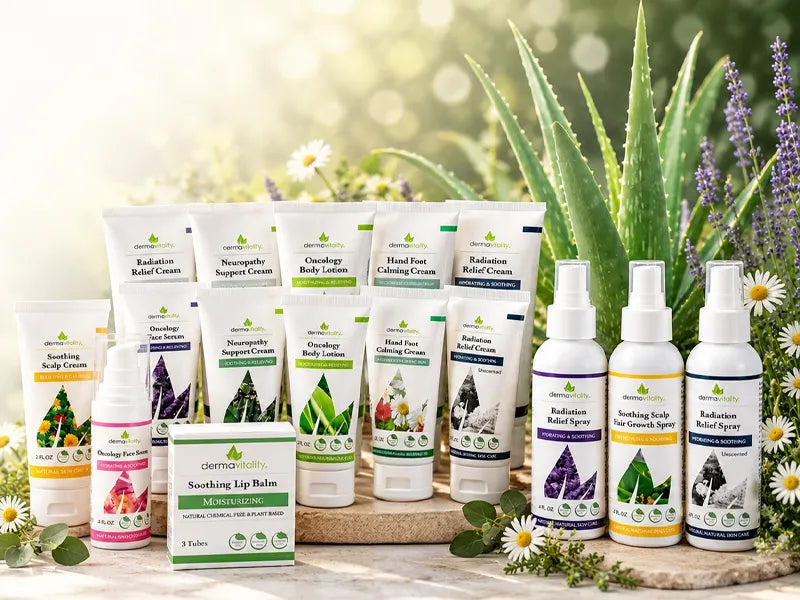
Dermavitality's radiation cream was developed by an oncology nurse and is made as a fragrance-free, plant-based moisturizer for skin that is sensitive during radiation therapy. An unscented calendula cream and a calendula spray round out the line for patients who prefer a different texture or scent profile. You can see all of them in the radiation skin care collection.
These products are cosmetics designed to soothe and support comfort. They are not a medical treatment, and they do not replace your care team's plan. Show the ingredient list to your nurse before you start, and follow their timing instructions.
Oncology Skin Care for Nurses and Healthcare Providers
If you are an oncology nurse, radiation therapist, or other clinician, you are often the first person a patient asks about skin care. A quick, consistent answer helps, and so does having something to put in a patient's hands.
Dermavitality runs a Healthcare Providers program that offers free samples and patient assistance for the underserved, with a supply of samples for your patients. According to the program page, samples may also be available through local pharmacies, and patients can order online with a discount code. Details and contact information are on the Healthcare Providers page.
For patients who want to try a product before committing, trial-size packets are available in the sample packs collection. Sample packs make it easier to check fragrance tolerance and texture with your team's input before buying a full size.
How Nurses Can Use This Guide With Patients
Share the roundup table above as a quick reference, point patients to the ACS and NCI pages in the references for their own reading, and remind them that product questions always go back to the care team. Patients tend to remember advice that is short, specific, and written down.
Here's How Dermavitality Can Help
If you are looking for skin care that fits radiation and chemo, Dermavitality was created by an oncology nurse and a breast cancer survivor who understand what treatment feels like from both sides. Here's what Dermavitality offers:
- Made for oncology skin: Products are designed for the skin changes that come with radiation, chemo, and related treatments.
- Free from parabens, phthalates, and petrochemicals: Plant-rich botanical formulas with a short ingredient list you can share with your team.
- Available directly or through your care team: Order online, or ask about the sample program for providers.
- Gives back: 20% of proceeds support the National Breast Cancer Foundation's HOPE Kit program.
- Made in the USA: Formulated and produced here in the United States.
- Built by a nurse and a survivor: Every product reflects lived and clinical experience.
If you manage more than one side effect, the oncology support bundles bring several products together, and the Restore collection offers daily botanical care between treatments. Read the full medical disclaimer before you begin any new product.
Want comfort for treatment-sensitive skin? Shop the radiation and chemo collections today.
Frequently Asked Questions
What do oncology nurses recommend for radiation skin care?
Oncology nurses typically recommend washing treated skin with lukewarm water and a mild, fragrance-free soap, patting dry, wearing loose soft clothing, and protecting skin from sun, heat, and cold. They also ask patients to check with the care team before using any cream, lotion, or deodorant on the treated area.
Is there a nurse recommended radiation cream?
Nurses do not endorse one universal cream, because the right choice depends on your treatment and skin. Many suggest a fragrance-free, alcohol-free moisturizer that your team has approved. Dermavitality's radiation cream was developed by an oncology nurse, but always show the ingredient list to your own nurse first.
Can you moisturize right before radiation?
Usually not. Many nurses ask patients to skip moisturizer for about two hours before a radiation session unless the care team says otherwise, since product residue can irritate skin or affect treatment. Timing varies by clinic, so confirm your own schedule with your radiation nurse or oncologist.
What skin care ingredients should I avoid during chemo?
The National Cancer Institute advises avoiding products that list alcohol or fragrance, since both can dry or irritate skin. The American Cancer Society also recommends skipping strong perfumes and very hot water. Always ask your oncology nurse before trying a new product on sensitive skin.
Do nurses recommend sunscreen during radiation or chemo?
Often, with guidance. The American Cancer Society suggests broad-spectrum sunscreen with SPF 30 or higher, plus dark or UV-protective clothing, once your team approves it for treated skin. Chemo can also raise sun sensitivity, so ask your oncology team which sun protection fits your medicines.
How can healthcare providers get oncology skin care samples for patients?
Dermavitality's Healthcare Providers program offers free samples and patient assistance for the underserved, and samples may be available at local pharmacies. Visit the Healthcare Providers page on dermavitality.com for details and contact information. Trial-size sample packs are also available for patients who want to test fragrance and texture first.
References
- American Cancer Society. "Radiation Therapy: Effects on Different Parts of the Body."
- American Cancer Society. "Rashes and Skin Changes."
- National Cancer Institute. "Skin and Nail Changes and Cancer Treatment."
- Oncology Nursing Society. "Manage Cancer Treatment-Related Skin Toxicities With ONS Guidelines."