
What Does a Chemo Rash Look Like? A Visual Guide to Symptoms and Relief
- What Does It Feel Like When a Chemo Rash Shows Up?
- What Does a Chemo Rash Look Like?
- Is Chemo Rash Dangerous?
- What Causes a Chemo Rash?
- How Long Does a Chemo Rash Last?
- How to Manage Chemo Rash Symptoms at Home
- When to Call Your Oncology Team Immediately
- Here's How DermaVitality Can Help
- Frequently Asked Questions
- References
A chemo rash is one of the most common and most alarming side effects of cancer treatment. This guide shows what chemo rash typically looks like, explains what causes it, answers whether chemo rash is dangerous, and shares an oncology nurse's tips for comfort and when to call your care team.
What Does It Feel Like When a Chemo Rash Shows Up?
Maybe it started as a few pink bumps across your chest after your second infusion. Maybe it showed up on your cheeks and scalp a week into a targeted therapy, and now people keep asking if you're feeling okay, when what you actually want to know is what this is and whether it's something to worry about.
If you're staring at a new rash and searching for answers late at night, you are far from alone. Skin changes are one of the most common side effects of chemotherapy, targeted therapy, and immunotherapy, and for many patients they show up before anyone warns them to expect it. As an oncology nurse, Mark Brown has sat with patients through this exact moment more times than he can count, and the first thing he tells them is the same thing we'll tell you here: what's happening to your skin right now is common, and it isn't your fault.
This guide walks through what a chemo rash actually looks like across the different forms it can take, what typically causes it, how long it tends to stick around, and the clearest signs that mean it's time to call your oncology team rather than wait it out. We'll also cover the simple, gentle skin care habits that can help you feel more comfortable while your body adjusts to treatment.
None of this replaces a conversation with the clinicians who know your specific treatment plan. Think of it as the plain-language explanation to read before that call, alongside our broader guide to chemotherapy skin side effects if you're also dealing with dryness, nail changes, or scalp discomfort beyond the rash itself.
What Does a Chemo Rash Look Like?
A chemo rash doesn't look the same for everyone. What it looks like usually depends on the specific drug you're on and how your skin responds to it. Here are the patterns patients and oncology nurses see most often.

Pink or Purple-Brown Bumps (Maculopapular Rash)
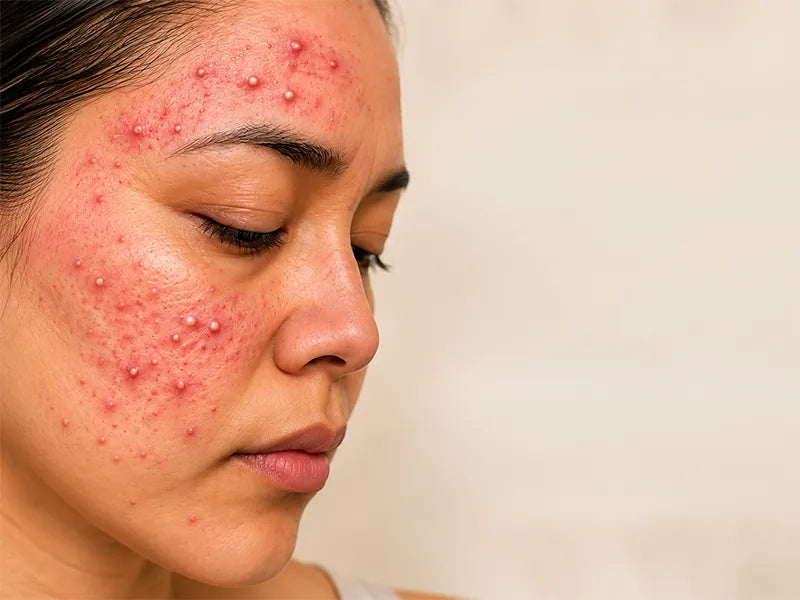
The most common type of chemo rash is a maculopapular rash: flat, pink-to-red patches studded with small raised bumps on lighter skin, or purple-to-brown patches on deeper skin tones. It tends to appear on the chest, stomach, back, and face, and it's often one of the first skin changes people notice after starting treatment.
Acne-Like Bumps (Papulopustular Rash)
If you're on a targeted therapy such as an EGFR inhibitor, this is the type of chemo rash you're most likely to see: small, red, acne-like bumps across the face, scalp, upper chest, or back. It's common enough that the large majority of people on these medications develop some version of it.
Redness and Swelling on the Palms or Soles (Hand-Foot Syndrome)
Some chemotherapy regimens cause a different pattern entirely: redness, swelling, and tenderness on the palms of the hands or soles of the feet, sometimes with peeling skin. This is known as hand-foot syndrome, and it can make ordinary things like walking or holding a coffee mug uncomfortable.
Target-Shaped Spots (Erythema Multiforme)
Less commonly, a chemo rash can take the form of raised, round spots with several visible rings that look almost like a bullseye or target. This type, called erythema multiforme, is worth mentioning to your care team even if it isn't bothering you, simply so it can be documented and monitored.
A rash can look different from person to person, and even from one week to the next. These descriptions are a starting point for recognizing what you're seeing, not a diagnosis — your oncology team is the one who can tell you exactly what type of rash you have and why.

Is Chemo Rash Dangerous?
Most of the time, no. A chemo rash is a known, expected side effect that your oncology team sees regularly, and most cases are manageable with simple skin care and, if needed, a prescribed cream or medication. That said, a small number of skin reactions during cancer treatment can be more serious, which is why it's worth knowing the difference.
According to the American Cancer Society, you or your caregiver should call 911 right away for swelling of the face, throat, or mouth; shortness of breath; hives or welts; or a fever that comes with the rash, chills, or a fast heartbeat.
You should also contact your oncology team, even if it isn't an emergency, if a rash keeps getting worse or doesn't improve, if itching doesn't let up or keeps you from sleeping for more than two days, or if you notice open, bleeding, or blistered skin, drainage, pus, or an unusual odor that could point to infection.
Rarely, a drug reaction can progress into something more serious, such as Stevens-Johnson syndrome. The Oncology Nursing Society notes that this type of reaction usually starts with flu-like symptoms, followed by a rash that blisters and causes the skin to peel. Early recognition and treatment make a real difference in outcomes, so flu-like symptoms followed by rapid blistering or skin peeling call for emergency care right away, not a wait-and-see approach.
The bottom line: you don't have to figure out on your own whether a rash is serious. Tell your oncology team about any new or changing rash so they can look at it, name it, and decide what, if anything, needs to change about your care.
What Causes a Chemo Rash?
Most types of cancer treatment can cause skin changes, including chemotherapy, targeted drug therapy, immunotherapy, radiation therapy, stem cell transplant, and hormone therapy, according to the American Cancer Society. Some chemotherapy drugs also increase photosensitivity, meaning skin can burn or develop a minor rash more easily in the sun, per the National Cancer Institute.
The specific drug you're on shapes what kind of rash you're likely to see. Targeted therapies such as EGFR inhibitors are especially well known for causing a papulopustular, acne-like rash, since the drug affects a receptor that skin cells rely on. Immunotherapy more often triggers a maculopapular rash, sometimes with itching, on the trunk and upper arms, and it can show up within the first month of treatment or, less commonly, months to years later.
Radiation works differently: it affects the skin at the treatment site rather than causing a rash across the body, and it comes with its own care routine. If radiation is also part of your treatment, our guide to caring for radiation-sensitive skin covers that separately.
How Long Does a Chemo Rash Last?
There's no single answer, since it depends on the drug, the type of rash, and how your body responds. The American Cancer Society notes that most rashes and skin changes develop within the first few weeks of starting cancer treatment, though they can appear at any point.
Some rashes fade on their own within a treatment cycle once your skin adjusts. Others need help: your care team may prescribe a topical corticosteroid cream or an oral medication, and for immunotherapy-related rashes, treatment is guided by how much of the body surface is affected, with steroids sometimes tapered over four to six weeks for more significant cases. Because the right approach depends on your specific drug and how your rash is graded, this is a conversation for your oncology team rather than a guess based on how someone else's rash behaved.
How to Manage Chemo Rash Symptoms at Home
While you're waiting to hear back from your care team, or managing a mild rash they've already looked at, a few gentle habits can help:
- Wash the area daily with a mild, fragrance-free cleanser and lukewarm, not hot, water
- Keep showers short, and pat skin dry instead of rubbing it
- Apply a hypoallergenic, cream-based, unscented moisturizer while skin is still a little damp
- Use a broad-spectrum sunscreen of SPF 30 or higher, since treated skin sunburns more easily
- Wear loose, soft clothing over affected areas instead of anything tight or rough
- Try an oatmeal or baking soda soak for itching, and avoid scratching even when it's tempting
This is also where Dermavitality's Chemo Skin Care line was built to help. It's a plant-rich botanical formula, developed by an oncology nurse specifically for skin going through treatment, made to support comfort rather than give you one more ingredient list to research. If the irritation is showing up on your scalp instead of your skin, our chemo scalp care guide covers that in more depth.
When to Call Your Oncology Team Immediately
Keep this list nearby, whether it's on your fridge or saved in your phone.
Call 911 or go to the emergency room for:
- Swelling of the face, throat, or mouth
- Shortness of breath
- Hives or welts appearing suddenly or spreading fast
- A fever along with the rash, chills, or a fast heartbeat
- Flu-like symptoms followed by a rash that blisters or causes skin to peel
Call your oncology team, even if it doesn't feel urgent, for:
- A rash that's getting worse or not improving
- Itching that won't let up or is keeping you from sleeping for more than two days
- Open, bleeding, or blistered skin
- Drainage, pus, or an odor that could mean infection
When in doubt, call. Your care team would rather hear about a rash that turns out to be minor than miss one that needed attention sooner.
Here's How DermaVitality Can Help
A chemo rash is uncomfortable enough without also having to guess which products are safe to put on it. Dermavitality was made specifically for skin going through cancer treatment, developed by an oncology nurse and a breast cancer survivor who have seen this stage of treatment from both sides.
Here's what DermaVitality offers:
- Made for the redness, irritation, and discomfort that can come with chemo rash
- Formulated without parabens, phthalates, or petrochemicals
- Available directly from Dermavitality, or through your care team's sample program
- Part of every purchase supports the National Breast Cancer Foundation's HOPE Kit program
- Made in the USA
- Developed by an oncology nurse and a breast cancer survivor who have lived this
DermaVitality is more than a skin care line. It's a small, steady source of comfort while your skin sorts itself out during treatment.
Want relief from chemo-related skin irritation? Shop the Chemo Skin Care collection today.
Not ready yet? Start with our guide to chemotherapy skin side effects for the fuller picture of what treatment can do to your skin.
Frequently Asked Questions
What does a chemo rash look like?
It varies by drug and person, but common patterns include pink-to-red or purple-brown flat patches with small bumps, acne-like bumps from targeted therapies, or redness and swelling on the palms and soles. Your oncology team can tell you which type matches what you're seeing.
Is chemo rash dangerous?
Most chemo rashes are a known, manageable side effect, not an emergency. Seek immediate care for facial or throat swelling, trouble breathing, hives, or fever with chills, and call your care team for any rash that's worsening, blistering, or not improving.
How long does a chemo rash last?
Most rashes appear within the first few weeks of treatment and improve within a treatment cycle or with prescribed care. How long yours lasts depends on the specific drug and how your skin responds, so your oncology team is the best guide for your timeline.
What causes a rash during chemotherapy?
Chemotherapy, targeted therapy, immunotherapy, radiation, and hormone therapy can all cause skin changes. Targeted therapies like EGFR inhibitors commonly cause acne-like rashes, while immunotherapy more often causes a flatter, spotted rash on the trunk and arms.
Can I put lotion on a chemo rash?
A gentle, fragrance-free, hypoallergenic moisturizer is generally fine and often recommended, but check with your oncology team before adding any new product, especially one with active ingredients, while you're in active treatment.
When should I call my oncology team about a rash?
Call anytime a rash is new, spreading, or changing, and don't wait if it's accompanied by blistering, open skin, signs of infection, or symptoms like fever or trouble breathing. Your team would rather hear from you early.
References
- National Cancer Institute. Skin and Nail Changes and Cancer Treatment.
- American Cancer Society. Rashes and Skin Changes.
- Oncology Nursing Society. Stevens-Johnson Syndrome and Toxic Epidermal Necrolysis: Oncologic Considerations.
- Oncology Nursing Society. Diagnose and Manage Dermatologic Toxicity Secondary to Immunotherapy.
Dermavitality products are cosmetic comfort-support products. They are not evaluated by the FDA and are not intended to diagnose, treat, cure, or prevent any disease. See our full disclaimer.
Read more

Table of Contents My Breast Cancer Surgeries at a Glance Why Chemotherapy Came Before My Surgery Preparing for My Mastectomy What Kind of Mastectomy Did I Have? Why I Remo...

Table of Contents What Does a Healing Mastectomy or Lumpectomy Scar Look Like Week by Week? How Long Does It Take for a Mastectomy Scar to Heal? How to Care for a New Mastectomy o...