Best Skin Care Brands for Cancer Patients: What to Look for During Treatment
- Why Do Your Hands Need Extra Care During Cancer Treatment?
- What Is Hand-Foot Syndrome?
- How to Prevent Hand-Foot Syndrome
- Gloves for Dermatitis and Sensitive Skin: What to Wear and When
- Daily Hand Care Checklist
- When to Call Your Oncology Team About Your Hands
- Here's How Dermavitality Can Help
- Frequently Asked Questions
- References
Hand-foot syndrome and treatment-related skin sensitivity can make daily tasks like washing dishes or gardening surprisingly uncomfortable during cancer treatment. This guide explains what hand-foot syndrome is, how to prevent and manage it, which gloves actually help with dermatitis and sensitive skin, and a simple daily hand care checklist to protect your skin through treatment.
Why Do Your Hands Need Extra Care During Cancer Treatment?
Somewhere around week two or three of a chemo cycle, your hands might start feeling like they belong to someone else: tight, dry, tingly, or oddly sensitive to things you never thought twice about before, like dish soap or a cold glass. For some people it builds into hand-foot syndrome, a specific and common reaction to certain chemotherapy and targeted drugs. For others it's a milder, more general dryness and sensitivity that still makes everyday tasks harder than they used to be.
Either way, your hands are doing a lot of unseen work right now, and they deserve more protection than they'd normally need. That's not an overreaction. It's a reasonable response to skin that's more vulnerable than it was before treatment started.
This guide covers what hand-foot syndrome actually is and how to lower your risk, which gloves actually help with treatment-related dermatitis and sensitive skin (and which ones can make things worse), and a simple daily hand care checklist you can actually stick with. If skin changes are showing up in other places too, our broader guide to chemotherapy skin side effects covers dryness, rashes, and nail changes beyond just your hands.
As always, this is background information, not a treatment plan. Your oncology team knows which drugs you're on and what your specific risk looks like, so loop them in on anything here that applies to you.

What Is Hand-Foot Syndrome?
Hand-foot syndrome, also called palmar-plantar erythrodysesthesia, is a reaction where the skin on the palms of your hands and soles of your feet becomes red, swollen, sore, or starts to peel or crack. According to the American Cancer Society, early signs include dryness, redness, tingling or itching, mild pain or numbness, and decreased sensitivity to touch. Left unaddressed, it can progress to intense redness, swelling, cracking, peeling, or blistering, and open areas can become infected.
It happens because hand and foot skin has a lot of small blood vessels close to the surface, and everyday pressure from walking or using your hands can cause the medication to leak into surrounding tissue. It's associated with certain chemotherapy drugs, including capecitabine, liposomal doxorubicin, fluorouracil (5-FU), gemcitabine, cytarabine, azacitidine, and decitabine, as well as targeted therapies such as bevacizumab, sorafenib, sunitinib, regorafenib, pazopanib, and axitinib.
The reassuring part: hand-foot syndrome is a known, expected side effect that your oncology team watches for, and most people recover once treatment is adjusted or completed. Reporting it early, rather than waiting to see if it gets better on its own, is what keeps it from becoming more serious.
How to Prevent Hand-Foot Syndrome
There's no guaranteed way to avoid hand-foot syndrome entirely if you're on a drug known to cause it, but the American Cancer Society and the Oncology Nursing Society point to habits that actually lower the pressure on your hands and feet:
- Avoid activities that put extra pressure or friction on your hands and feet, including long walks or runs, gardening, or repair work with hand tools
- Ask for help with sharp, hot, or cold objects, and take regular breaks from repetitive hand tasks
- Limit time in very hot water for baths, showers, or dishwashing, and skip hot tubs during active treatment
- Protect your skin from sun exposure, and apply flexible, reusable ice packs if cooling brings relief
- Wear well-fitting shoes with extra cushioning, and avoid tight shoes or gloves that create friction against the skin
- Skip professional manicures and pedicures for now, and handle nail care gently and carefully
- Use alcohol-free, fragrance-free, and dye-free lotions, choosing a thicker, more moisturizing formula for very dry skin
For chemotherapy specifically involving taxane-based drugs, the Oncology Nursing Society notes that cooling procedures such as cooling gloves, cooling boots, or ice packs are sometimes used to help prevent symptoms, though this is based on limited evidence and should be discussed with your care team rather than started on your own.
If you do notice early symptoms, tell your oncology team right away rather than waiting to see if they pass. Catching hand-foot syndrome early is what keeps it manageable.

Gloves for Dermatitis and Sensitive Skin: What to Wear and When
Gloves come up a lot in hand care during cancer treatment, but they're not all doing the same job, and using the wrong kind at the wrong time can work against you.
Protective Gloves for Chores and Irritants
When your skin is drier and more reactive than usual, everyday tasks like washing dishes, cleaning with household products, or gardening can act as irritants and lead to a contact dermatitis reaction on top of whatever your treatment is already causing. Wearing gloves for these specific tasks, ideally a cotton-lined pair rather than bare rubber or latex against the skin, helps keep soap, cleaning chemicals, soil, and hot water off skin that's already working overtime to repair itself.
Moisture-Locking Gloves for Overnight Care
This is a different use entirely. After applying a thick, fragrance-free moisturizer to your hands at night, a soft pair of breathable cotton gloves can help hold that moisture against the skin while you sleep, which is a habit the American Cancer Society specifically calls out for hand-foot syndrome care.
When Gloves Can Make Things Worse
Here's the nuance that's easy to miss: if you're actively dealing with hand-foot syndrome, tight-fitting gloves worn during activity can add friction and pressure exactly where your skin can least tolerate it. The same source that recommends moisture-locking gloves at night also advises avoiding tight gloves, shoes, or clothing that rubs against irritated skin during the day. The difference is fit and purpose, a loose, soft glove for locking in moisture at rest is helpful, while a snug glove for gripping tools or scrubbing a pan during an active flare is not.
Daily Hand Care Checklist
A simple routine you can actually keep up with, most days of treatment:
- Wash with a gentle, fragrance-free cleanser and lukewarm, not hot, water
- Pat hands dry instead of rubbing, and moisturize right away while skin is still a little damp
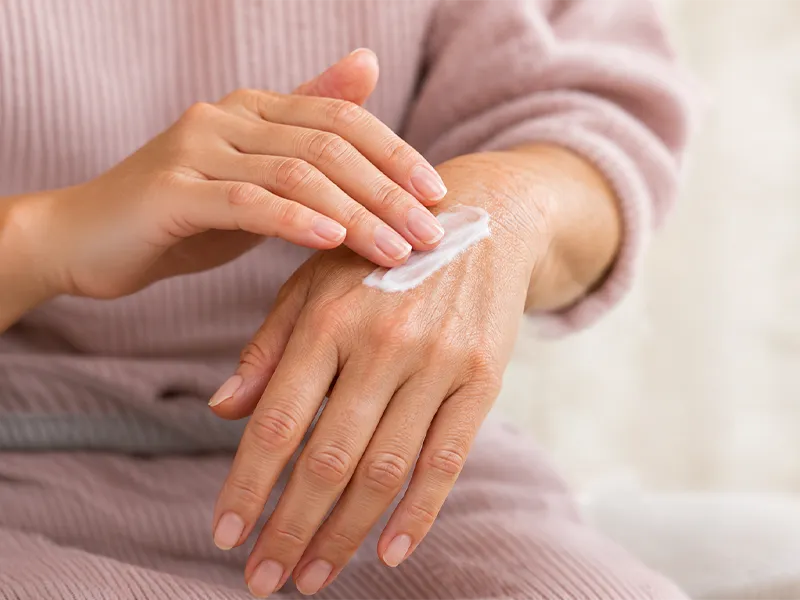
- Choose an alcohol-free, fragrance-free, dye-free lotion or cream, and reapply through the day rather than once in the morning
- Put on cotton-lined gloves before dishes, cleaning, or gardening, and swap them for a fresh pair once they're damp inside
- Slip on loose cotton gloves after your evening moisturizer to help lock hydration in overnight
- Check your palms daily for any new redness, dryness, tingling, or peeling, so changes get caught early rather than after they've progressed
- Keep nails trimmed and cared for gently at home instead of at a nail salon during treatment
Dermavitality's Neuropathy line was built by an oncology nurse specifically for skin like this: a plant-rich botanical formula made for the tingling, dryness, and discomfort that come with hand-foot syndrome and chemo-related hand and foot sensitivity. The Neuropathy collection includes a dedicated hand-foot syndrome cream alongside a lighter, fast-absorbing option for everyday use.
When to Call Your Oncology Team About Your Hands
Hand and foot skin changes are common enough that your care team expects to hear about them, so don't wait for a scheduled visit if you notice:
- New redness, swelling, tingling, numbness, or dryness that's changing or getting worse
- Skin that starts to peel, crack, or blister
- Any blister that breaks open, or signs of infection like drainage, odor, or spreading redness
- Pain that makes it hard to walk, hold objects, or use your hands normally
Don't try to pop or break a blister yourself. According to the American Cancer Society, blisters that break open on their own can become infected, so it's safer to let your care team guide how it's handled.
Most people recover from hand-foot syndrome once their treatment is adjusted or completed, and reporting symptoms early is exactly what keeps that recovery on track.
Here's How Dermavitality Can Help
Protecting your hands through treatment shouldn't mean guessing which cream or glove is actually safe for sensitive, treatment-affected skin. Dermavitality was made specifically for skin going through cancer treatment, developed by an oncology nurse and a breast cancer survivor who understand this stage from both sides.
Here's what Dermavitality offers:
- Made for the tingling, dryness, and discomfort of hand-foot syndrome and chemo-related hand and foot sensitivity
- Formulated without parabens, phthalates, or petrochemicals
- Available directly from Dermavitality, or through your care team's sample program
- Part of every purchase supports the National Breast Cancer Foundation's HOPE Kit program
- Made in the USA
- Developed by an oncology nurse and a breast cancer survivor who have lived this
Dermavitality is more than a skin care line. It's a small, steady routine for hands that are doing more work than usual right now.
Want relief for hand-foot syndrome or treatment-related dryness? Shop the Neuropathy collection today.
Not ready yet? Start with our guide to chemotherapy skin side effects for the fuller picture of what treatment can do to your skin.
Frequently Asked Questions
What is hand-foot syndrome?
It's a skin reaction, medically called palmar-plantar erythrodysesthesia, where the palms and soles become red, swollen, sore, or start to peel or crack. It's associated with certain chemotherapy and targeted cancer drugs and is usually manageable when caught early.
What gloves are best for dermatitis during chemo?
For chores and irritants, cotton-lined gloves protect skin from soap, chemicals, and friction. For overnight moisture, loose, soft cotton gloves worn after moisturizing help lock hydration in. Avoid tight gloves during an active hand-foot syndrome flare.
How can I prevent hand-foot syndrome?
Avoid friction and pressure on your hands and feet, limit hot water exposure, wear well-fitting shoes, use fragrance-free moisturizer, and report early symptoms like dryness or tingling to your oncology team right away rather than waiting.
Can I still do dishes or gardening during chemo?
Yes, with protection. Wearing cotton-lined gloves and limiting time in hot water can help prevent chemicals, soil, and friction from irritating already-sensitive skin, though your care team may suggest specific limits based on your treatment.
When should I call my oncology team about my hands?
Call for new or worsening redness, swelling, tingling, numbness, peeling, cracking, or blistering, or any pain that affects daily tasks. Report changes early rather than waiting to see if they improve on their own.
Does hand-foot syndrome go away?
Most people recover once their treatment is adjusted or completed. Early reporting and consistent daily hand care are what typically keep it from progressing to something more severe.
References
- American Cancer Society. Hand-Foot Syndrome.
- Oncology Nursing Society. Manage Cancer Treatment-Related Skin Toxicities With ONS Guidelines™.
Dermavitality products are cosmetic comfort-support products. They are not evaluated by the FDA and are not intended to diagnose, treat, cure, or prevent any disease. See our full disclaimer.